Every shoot day runs on a chain of command whether anybody wrote one down or not, and when the brand has settled who owns the final yes before the van is loaded, the day runs, but when they have not you end up with six intelligent people holding opinions about one garment while the clock keeps charging all of them.
That is the politics of the set.
It is also the largest hidden cost in apparel photography, and what is it? Not the studio and not the rate, its the half hour lost four separate times because nobody in the room was allowed to say yes.
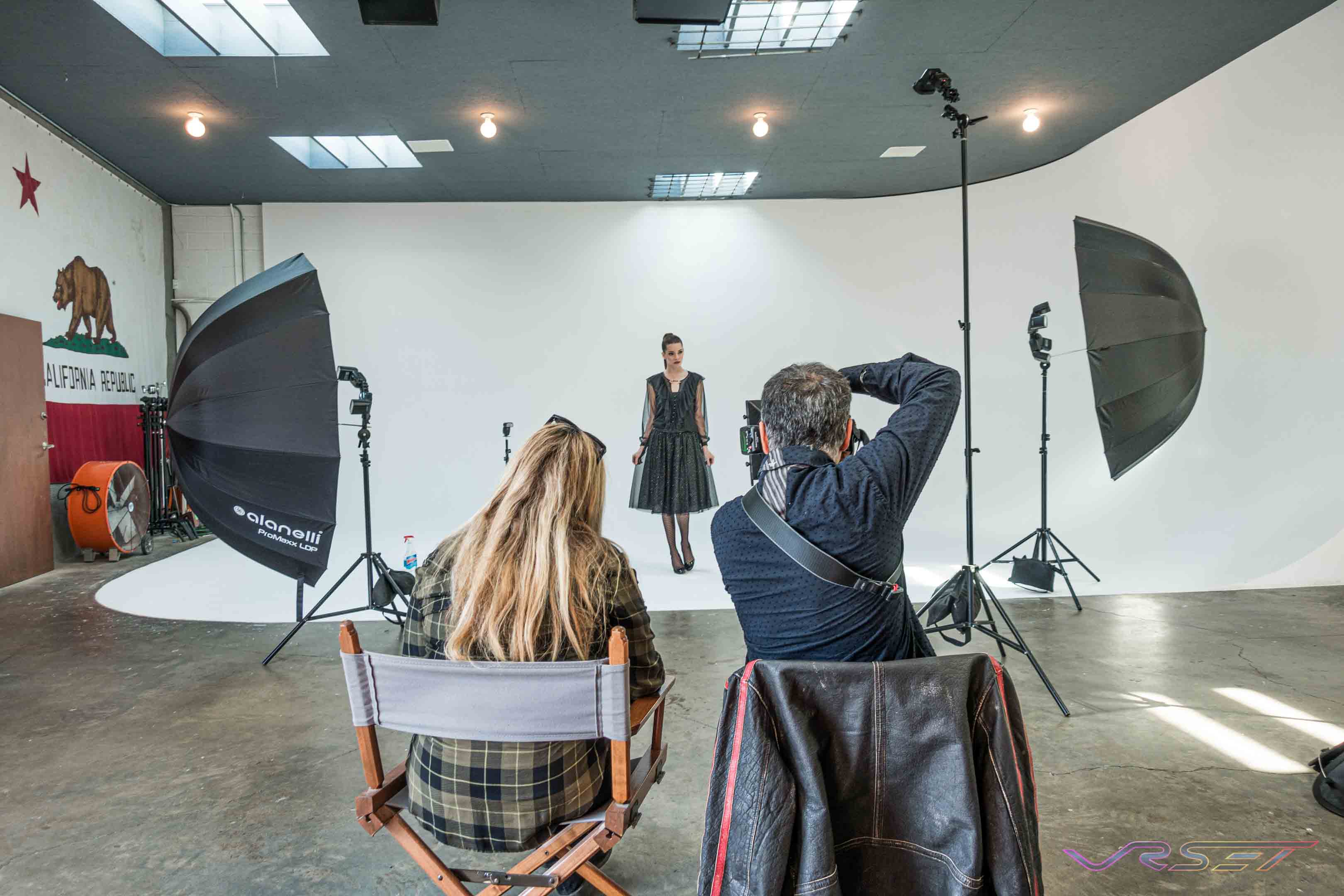
So why is everybody sitting down? Because sitting is procedure rather than laziness, and when the person holding approval is watching the same tethered frame I am watching, the yes takes four seconds and the day moves, whereas the moment she drifts across the room to look at the model instead of the photograph she has started approving something the customer will never see, and we will discover at retouch that the sleeve was reading wrong the whole afternoon.
Put whoever can say yes in a chair beside the monitor. That single arrangement will save a brand more money than any negotiation over the day rate ever has.
How that photograph came to be
The room is a white cyc inside an industrial building and it is not remotely glamorous, there is a California Republic flag hanging on the wall to the left, an orange floor fan roughly the size of a car wheel, skylights, bare bulbs and a concrete floor with a crack running through it.
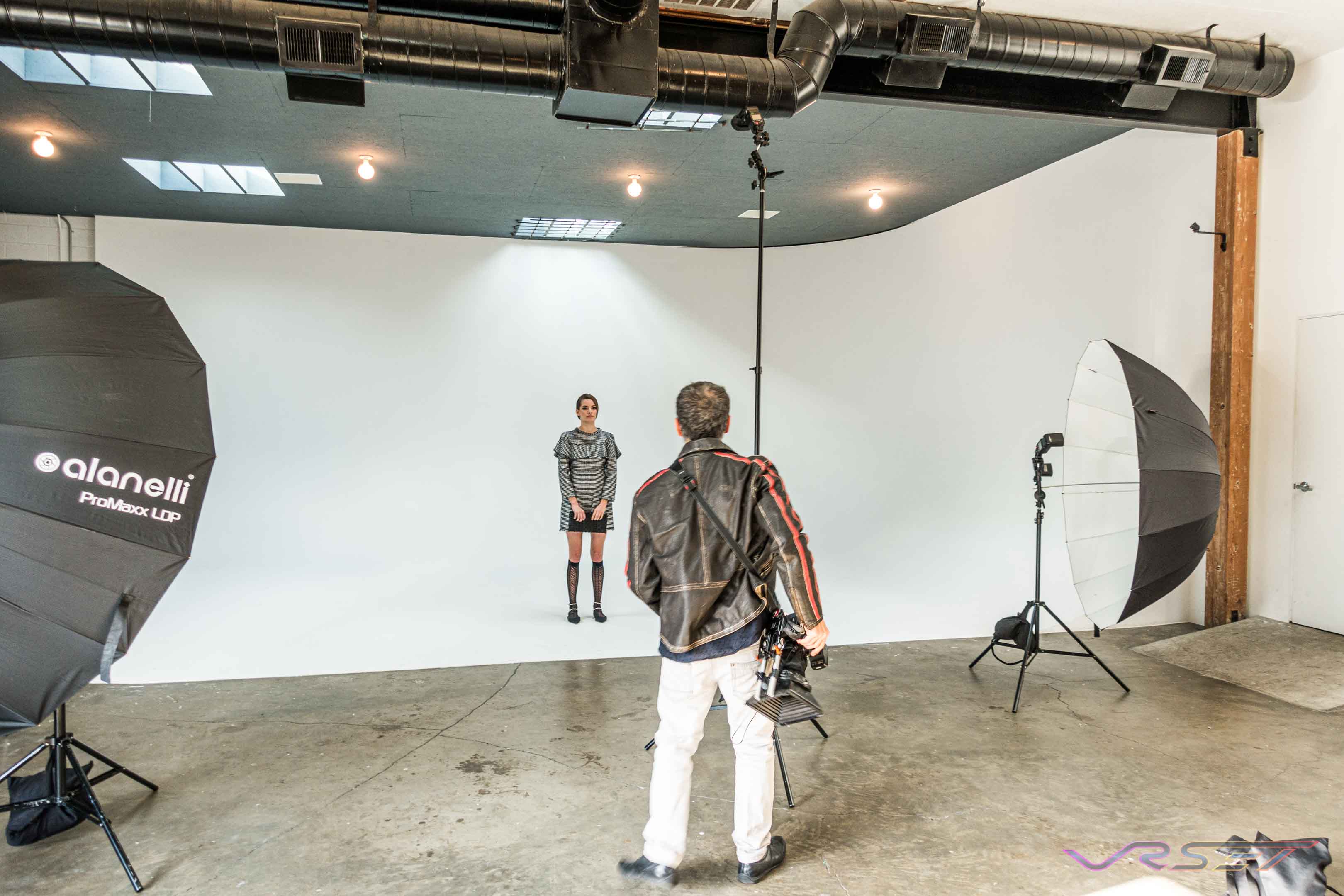
Two black parabolic umbrellas, one either side, both feathered so the light wraps the model rather than hitting her, and the fan switched off despite the heat because a floor fan and a tulle skirt have never once negotiated successfully. My leather jacket is over the back of the chair for the same reason.
The reason I dropped to a seated height for that look was the skirt itself, since standing up shortens it and kills the shape the tulle is doing, whereas sitting puts the hem where it belongs, and it took exactly one test frame to find that before the whole look went quickly, which mattered a great deal because there was a full rail of them waiting their turn.
Behind the scene
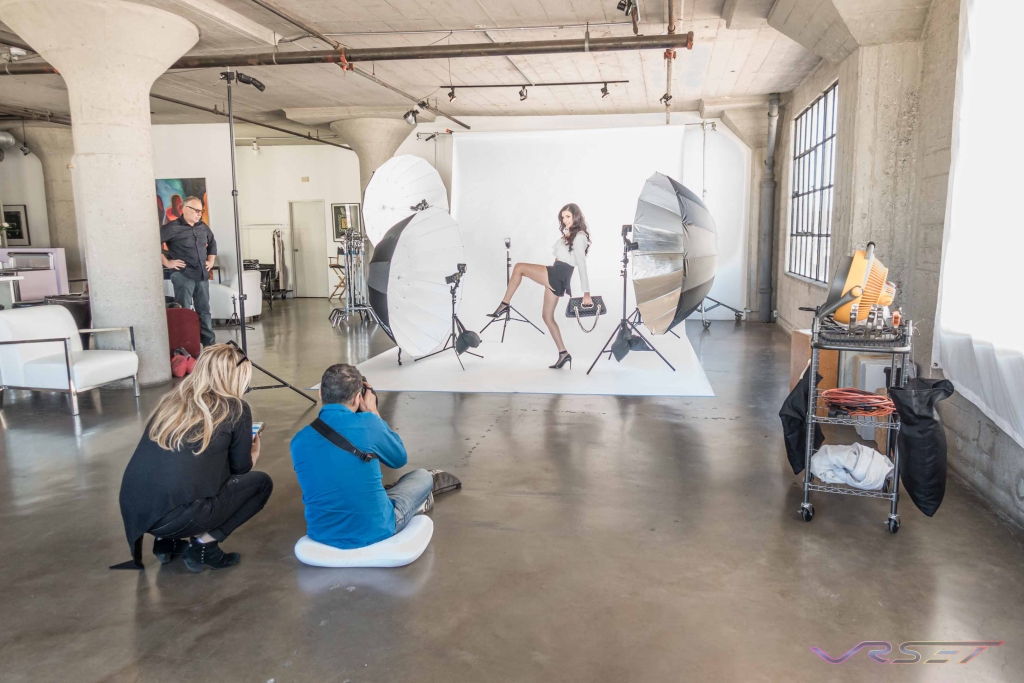
Here is the photograph brands should genuinely study, and it was not taken on the set at all.

Seven people, one model. She is wrapped in a cable knit sweater and leggings scrolling her phone while her hair gets braided, and every last person in that room is being paid for that minute, which is not a criticism of a single one of them, that is simply what a shoot day looks like and it’s the correct number of bodies for the work.
But do you see where a budget actually goes? It is nowhere near where most brands assume it goes.
So what is the real answer sitting inside that photograph? The rail behind her chair. Every look steamed and tagged and hanging in order before the day begins is a look that gets photographed, while every look that turns up in a suitcase and has to be found and pressed and puzzled over is fifteen minutes with seven people standing inside it…do that four times across a morning and you have spent an hour of everybody, which is most of what a small brand imagines it is saving by skipping a stylist.
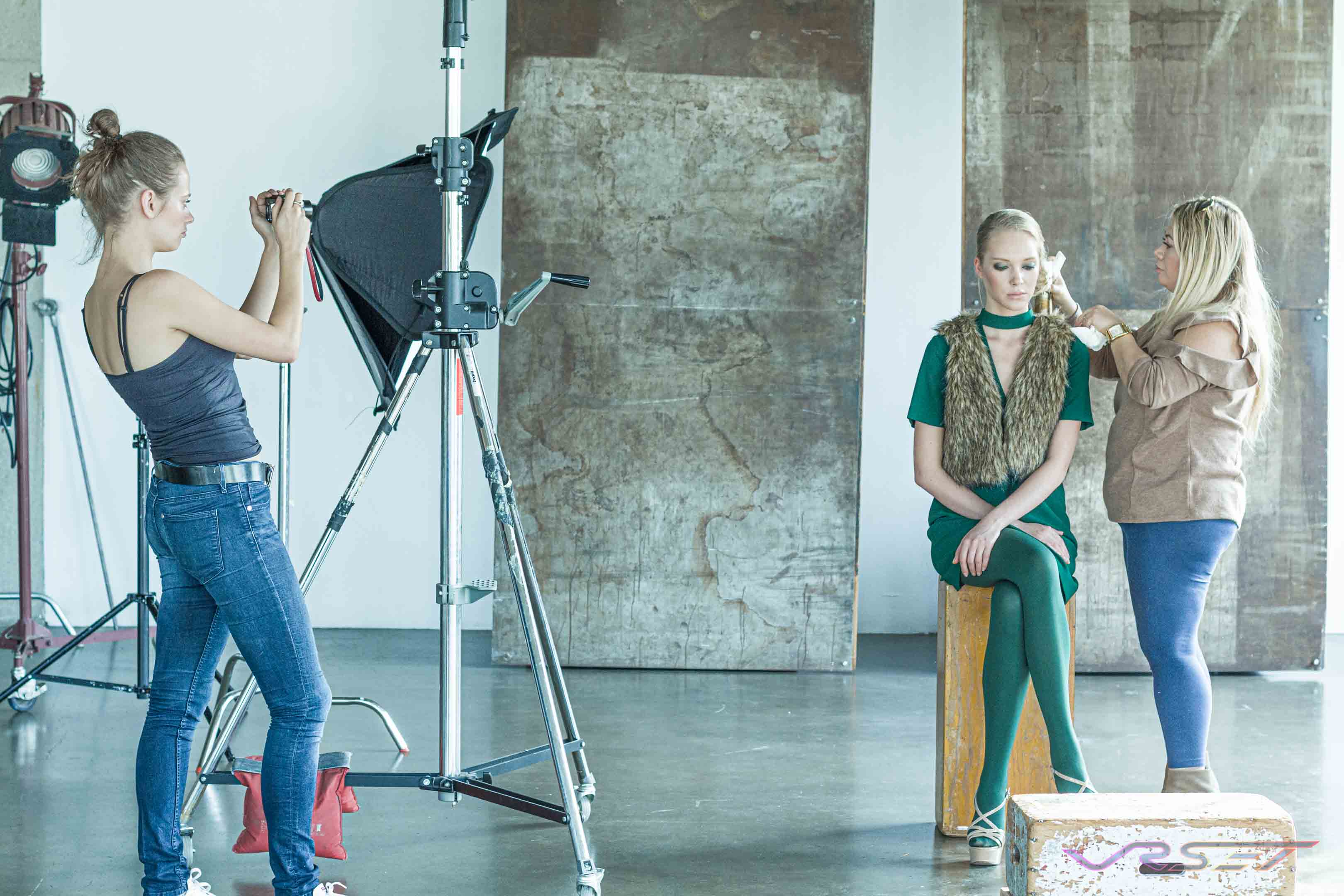
That frame is the entire argument compressed into one image, because nobody in it is waiting for anybody else, the makeup is happening and the light for the next look is being built during the same minute rather than after it. Sounds obvious, doesn’t it? Almost nobody does it, because doing it requires one person on the day whose whole job is thinking a setup ahead of everybody, and that person is the very first line a cheap quote deletes.

So before anybody argues about the rate, settle three things in writing.
1- Who is on the day, and which one of them can approve a frame without telephoning somebody else.
2- What order the looks get shot in, decided the night before rather than at eleven the next morning.
3- Who is carrying responsibility for the rail turning up pressed and already in that order.
Which of the three matters most? All of them equally, and get those three right and a merely competent photographer will hand you a good day, get them wrong and the finest photographer in this city will hand you an invoice for standing around in a nice room.
Everybody wants to talk about the camera. Nobody ever wants to talk about the rail.